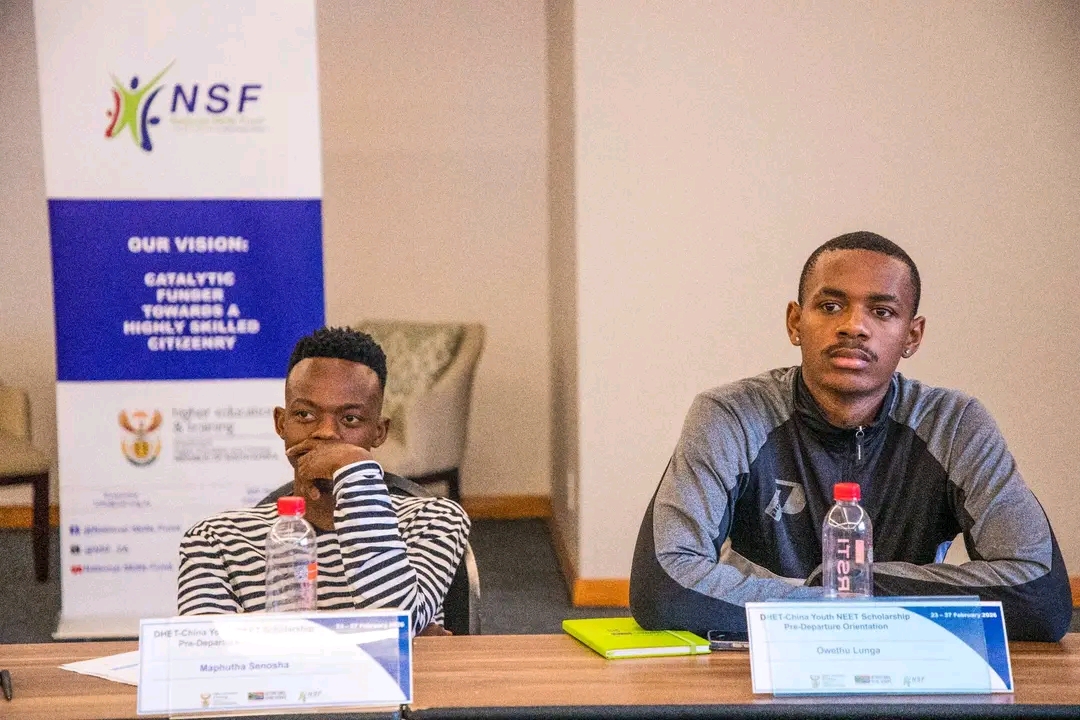
The NSF’s Involvement in South African Youth Education and Global Learning Opportunities
South Africa boasts a young and vibrant population, providing social and economic development prospects. However, there are many young South African residents who have barriers to quality education, unemployment, and are not given opportunities to work internationally. In reference to obstacles, the NSF has had a constant focus in providing South African residents with training and education that inform their insight and promote confidence to provide a global perspective to their skills and create a work environment that transforms the life of the individual and the society as a whole. With the answer, it employs the focus of preparing the South African young population for the global challenges, competitions, and interconnections.
The NSF has a growing focus on the South African population that provides increasing economic activity and employment value. One of the growing values the NSF has recognized and developed in the South African population is economic activity value, while the NSF has the value of increasing South African population. It is ideal for the NSF to have growing value to provide the South African population. It is also ideal for the South African population to have developed value of economic activity. Global education opportunities are also priorities for the NSF.
International learning initiatives offer South African youth the possibility to engage with other individuals across the globe who possess varying cultural, professional, and educational experiences. This engagement is important for their personal growth and general understanding of the world beyond their immediate environment. Young South Africans learn about world markets, advancements, and interpersonal relations when they take part in international training, study exchanges, research internships, and collaborative project internships. All of these experiences prepare them to positively impact their country and the rest of the world become global citizens.
Furthermore, these global educational projects help dispel the doubt and uncertainty that many students and young graduates feel about their ability to engage with global, and often, highly competitive economic environments. Young South African participants in NSF-sponsored initiatives enter new educational and professional markets that require them to adjust, and often adopt new methods of work. They engage with learners and educators from other countries, which give them the impetus to share their ideas and take part in conversations, and demonstrate their professional competencies. This self-assuredness fosters professional, and later, economic, instrumental, leadership success.
Another important aspect of the NSF’s commitment to global learning is the impact on the range of thinking and knowledge. When youth learn or work overseas, they experience different instructional strategies, more sophisticated tools, and alternative problem-solving techniques. They see how other nations tackle problems in the education, technology, business, and social sectors. These encounters help young people in South Africa think of how the same problems can be addressed in their country. Therefore, global learning is a source of motivation and creative thinking to help young people in the improvement of their society and industries.
Along with the knowledge and self assurance, the NSF recognizes the importance of developing comprehensive international networks. In today’s world, collaboration and partnerships across borders are fundamental to professional success. South African youth get the chance to meet international students, researchers, mentors, and other professionals during international programs. These individuals can become future collaborators, employers, or business partners. By developing international networks, the NSF allows young South Africans to actively engage with global issues rather than remaining on the periphery.International learning also helps develop important soft skills in today’s workplace, such as communication, collaboration, flexibility, leadership, and cultural sensitivity. Interactions between students and people of different cultures and backgrounds can enhance their appreciation of diversity and ability to operate in various cultural settings. The above experiences prepare students for careers in global enterprises, international businesses, and other fields requiring international integration.
The NSF’s initiatives also mitigate skills shortages in South Africa, where so many sectors still need highly qualified personnel with an ability to work in sophisticated and competitive global environments. By familiarizing participants with global standards, the NSF ensures that the members of the workforce return with skills that are essential for the economic development of the country. Such people retain the capacity to transform the customs, practices, and technologies of their communities and workplaces.
Global learning opportunities impact the youth and the community. After attending international programs, young people return to South Africa and share their knowledge and experiences. This can include mentoring other students, community initiatives, and local innovation and entrepreneurship. The impact extends to other people and the community.
The NSF also understand the importance of collaboration to provide global learning opportunities. The NSF collaborates with international universities, training institutions, governments, and industries to design programs specific to the needs of South African youth. This ensures that the education and training are practical and of good quality.
Creating programs that are inclusive and accessible to disadvantaged youth is an essential part of NSF’s commitments. Many young South Africans are from disadvantaged and may not be able to afford access to international education or training opportunities. The NSF provides funding and support to disadvantaged youth and gives them access to global learning opportunities. This commitment to equality opens up opportunities for youth to reach their potential.
Advantages and Issues of the NSF’s Global Learning Opportunities for South African Youth
The National Skills Fund (NSF) is vital for helping finance the building of education and skills in South Africa. One of their primary areas of focus is the global learning opportunities for the youth. These include international study opportunities, training exchanges, collaborative international research, and partnerships with foreign institutions. South African youth participants in these initiatives acquire international knowledge, experience, professional networks, and an appreciation for diverse cultures. However, the benefits of these international initiatives come with challenges that must be addressed to maximize their potential.
The NSF Global Learning Opportunities provide youth with the means to stimulate their personal and professional growth while developing their appreciation for international diversity. Participants in international learning programmes encounter diverse culture, and this helps them to gain deeper insight on how distinct countries approach education, technology, business, and social development. As a consequence, international learning participants develop a global mindset and an appreciation for diverse thought and problem-solving approaches.
Another crucial advantage is the enhancement of confidence and self-reliance. Traveling abroad or studying in a foreign country may seem intimidating to most young people. However, with the energy and effort needed to adjust to a new school system and communicate with students from other countries, they start to realize their self-confidence and determination. In the long run, this experience aids in coping in the various facets of life, both personal and professional.
Possibilities of global learning also leads to development of various skills and makes individuals more employable. Participants are sometimes provided with more sophisticated and contemporary technology, advanced knowledge, and innovative instructional strategies which aren’t available in their local region. With their New (international) experience and skills, young South Africans are able to compete for job vacancies in their country. International candidates are seen as a resource who bring flexibility, cultural sensitivities, and the ability to work in heterogeneous and diverse environments.
One more benefit of global learning programs is the opportunity to build long-lasting friendships in other countries. Students, lecturers, and professionals who are part of the global learning programs come from different countries in the world. Therefore, these friendships may lead to collaboration in further studies, career development, or other professional projects. International network is very important for young South Africans as it helps them to be aware of the global trends, innovations and opportunities which they can utilize in their career or business.
Furthermore, opportunities for global education foster innovation and the transfer of ideas and skills. When South Africans have the opportunity to study or train abroad and return to South Africa, they still have the chance to apply and impart new ideas and skills to the south african continent. They can improve existing Industries, introduce new technologies, and find new solutions to existing problems. This transfer is beneficial for economic development and for positioning South Africa better in the global economy.
NSF Global Learning Opportunities Challenges
Despite the numerous benefits, global learning programmes present numerous challenges. International education and travel, for example, is extremely costly. Funding international programmes involves a considerable financial outlay, covering tuition and accommodation, travel, and living expenses. Although the NSF offers assistance, limited funding may place a ceiling on the number of students able to participate in the programmes.
There is also the challenge of adapting to new cultures, as well as new academic settings. Moving abroad can mean encountering new cultures and ways of doing things, as well as learning to speak a new language and live a new set of ways. These changes can be frustrating and detrimental to a person’s health, and can have serious negative effects on a person’s academic success, particularly during the early part of the programme.
The possible impact of brain drain is of particular concern. Students who travel abroad for studies and gain some work exposure may decide to remain in the host country for employment. Although brain drain is an individual gain, it is a loss for South Africa, as it increases the shortage of professionals who could assist in developing the country.
South Africa already faces numerous logistical and administrative barriers. International learning programmes require sophisticated logistical arrangements and collaborative frameworks among several governments, higher education institutions, and sponsoring agencies. The myriad administrative processes including visas, travel, and academic recognition of the courses can affect an individual’s ability to participate in the global programme.
Access and awareness remain a global challenge. The youth, especially in rural areas, generally lose on this opportunity due to lack of information or the required qualifications. This constitutes gross inequality in global learning opportunities.
The National Skills Fund continues its commitment to investing in the youth of South Africa by creating learning opportunities that foster confidence, broaden perspectives, and help youth develop international connections. The NSF, by focusing on international education and training, provides youth the opportunities and resources to develop skills, knowledge, and the exposure to succeed in a world that continues to be interconnected. Participants in NSF programs gain confidence, develop new perspectives, and create international connections that are essential for the development and competitiveness of South Africa. With dedication, the NSF is preparing young leaders to positively impact the world and improve their communities.