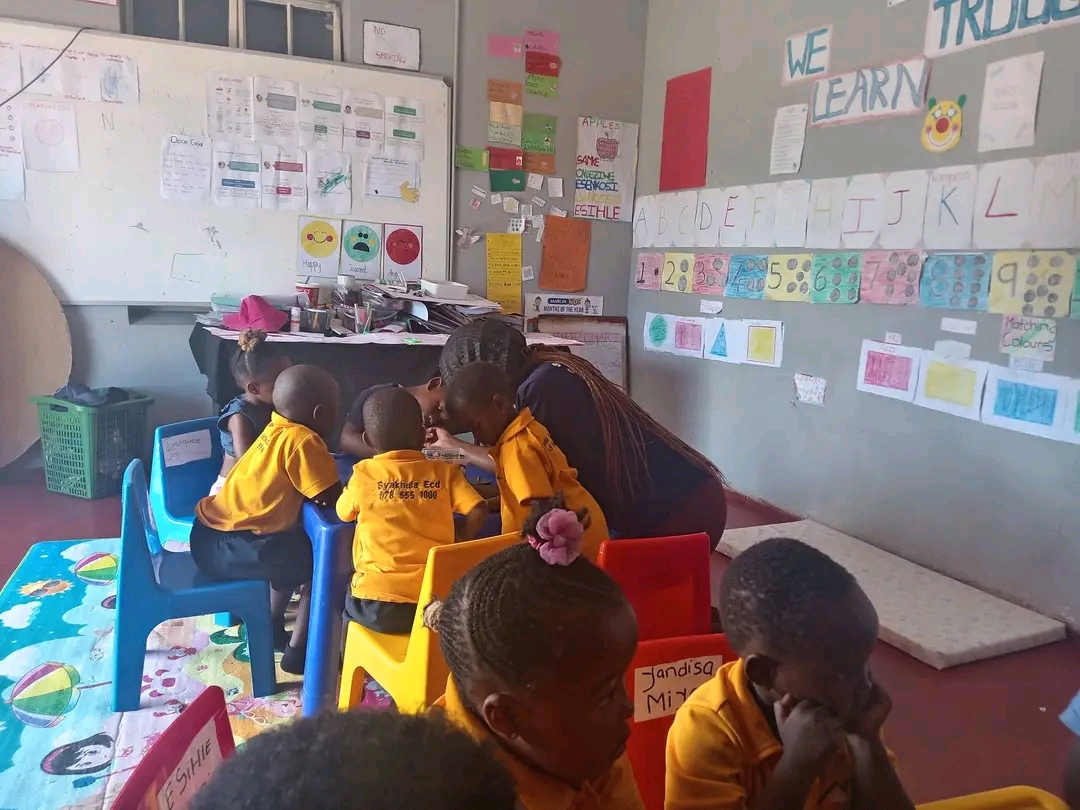
How to Prepare an Early Childhood Development (ECD) Programme and How to Make Effective Use of It
Early Childhood Development (ECD) covers the growth and learning from birth to roughly eight years of age. It is critical to a child’s physical, emotional, social, and cognitive development. In this stage, children learn the core skills which determine their future learning, conduct, and overall wellness. It is therefore crucial that an ECD programme be carefully prepared to ensure the right development of children within a secure, encouraging, and growth-promoting environment. A good ECD programme cares for and assists the development of children’s learning in addition to their health, emotional needs, social skills, and overall well-being. Thus, it is important for educators, caregivers, and the community to to learn the modes of constructing such a programme and its optimum application.
The intention of an ECD Programme
The primary goal of an ECD Programme is to give children the chance to learn through play and learn from each other. Learning at this age is best achieved through informal contact and not formal teaching where children are encouraged to activities stimulate their curiosity and creativity and active participation. So an important focus of the ECD Programme is to stimulate and develop the children’s language, communication, problem solving, physical movement, and social interaction skills.
An ECD Programme should also aim to help the child develop totally and not just in an area of growth. Total development means supporting the child in all areas of growth, including physical development, health and emotional development, cognitive development, and social relationships. When all of these are developed, children are more likely to do well in school and later in life.
The construction of an ECD Programme
The most important consideration in the ECD Programme is planning. This is the first construction element to be set in place. This element enables the educators/ caregivers to put together the activities, and the materials which will be used to help support the children’s development and learning. This planning stage will help to determine the age range of the children, the stage they are in their development, and the learning expectations of the proposed programme.
Prior to planning learning activities, specific objectives need to be established. Educators may aim to achieve certain targets such as, building communication abilities, enhancing creativity, refining motor skills, and developing social skills. Activities can be organized to reinforce such targets after they have been established.
Equally important to learning objectives is a well-defined daily schedule. Young audiences feel safe and stable in an environment that has predictable patterns. ECD programs often schedule free and unstructured play, circle time, stories, songs, arts, and crafts, and outdoor play, as well as a time to rest. This kind of structured schedule fosters participation and provides a broad spectrum of learning opportunities.
Planning an ECD program also includes Creating a Safe and Stimulating Learning Environment
A stimulating, safe and clean child-friendly learning environment is essential for a successful ECD program. Learning spaces that allow for unhindered movement heightens safety.
A stimulating environment includes materials that promote learning, and exploration. Books puzzles, blocks, craft materials, toys, games, and building materials, enhance creativity and support learning and exploration. The environment can also be made more attractive using educational posters and charts.A vital component of an ECD program is an outdoor play area. Activities like running, climbing, and ball play build strong muscles and improve coordination and self-assurance. Outdoor play spaces also give children opportunities to work and play with their peers, developing social skills and allowing them to connect with the natural world.
Creating Activities That Are Appropriate for the Child’s Development Stage
When constructing an ECD program, activities should be created for the appropriate age of the children. Activities must be aligned with the level of development of the child. Activities should be difficult enough to stimulate growth without being discouraging.
Younger children should be engaged in activities that incorporate sensory development like the use of varying textures, listening to and identifying different sounds, and playing with water and sand. These activities promote sensory awareness and stimulate their natural curiosity.
Older children can engage in activities like storytelling, drawing, singing, playing counting games, and simple problem-solving. These activities promote language development, enhance their creativity, and deepen their understanding of numbers.
One of the most important elements in any ECD program is the use of play-based learning. Children learn to share, work with others, problem solve, and manage their emotions during play. Educators should promote both individual and group play activities.
Partnership with Parents and the Community Also Matters Most of all, for an ECD programme to be worthwhile, it is essential to involve parents and the wider community. Parents are an integral part of a child’s development, and their involvement will strengthen the impact of the programme.
Educators can involve parents in various ways, including meetings, workshops, and other forms of communication concerning their children’s development. Parents can also be encouraged to create a further learning environment at home, including reading, educational games, and health routine games.
Children’s well-being also relies on community involvement. Local institutions, health services, community leaders, and others can provide the programme with important resources, knowledge, and active support. When a community joins together, a better environment is created to support the well-being of all children.
Building Educators’ Capacities and Supporting Them Educators and caregivers are central to the success of any ECD programme. They should be trained in early childhood education, child development, and effective teaching strategies.
Training enables educators to acquire various skills, including lesson planning, classroom management, child communication and support, and emotional development support. Educators also need to engage in further training (professional development) to keep their skills up to date and to learn new and better ways of working with children.
The creation of positive relationships between educators and children is crucial. Relationships like these make it possible for children to feel confident, valued, and even cared for, and if children feel this way, it becomes possible for them to participate in more learning activities.
Continuous Programme Assessment and Evaluation
The assessment and evaluation of an ECD programme is another integral step of the process. Evaluation provides educators with the feedback needed to determine if, and to what extent, the programme is meeting the goals and the needs of the children involved in the programme.
The monitoring of children is done via assessment of their behavior, level of involvement in the activity, and their level of involvement in the activity. Simple drawing, storytelling, and participation in group activities is a means that children can be evaluated in terms of weaknesses and strengths, In the case that additional support is needed.
Parents and members of the community can contribute feedback to the programme, and this feedback, combined with assessment from educators, can be used to make the programme more effective.
Tip to Maximize an ECD Programme
Once an ECD programme has been devised, the next step is efficient utilization to promote maximized benefits. Prior to a full circulation of an ECD programme to the community, the programme must be complete. This means that the educators must be able to demonstrate the programme in a flexible manner to them to suit the needs of the children. This means that children may have their own goals and interests and, in this way, the educators act as a facilitator. This means that educators may act as facilitators to the children in this way.
Children learn by doing, not watching. Active participation is key. Educators should structure their lessons to students’ questions, comments, and participation in meaningful group activities.
To make the best use of the program, stimulation and the use of creativity should be promoted. This means that the children must be provided with the opportunity to experiment, make mistakes, and work to solve problems. This builds confidence and promotes the development of individual, independent thinking.
Social and emotional development needs to be addressed by ECD programs. Children learn to foster relationships when they participate in activities that cultivate sharing, cooperation, and empathy. These skills are important in school and life.
The Promotion of Health and Nutrition
The child’s health and nutrition are important to an ECD program that is effective. Good nutrition is intrinsic to the child’s brain development, physical growth, and the overall state of well being. A number of ECD centers offer meals or snacks that are nutritious.
The children can also be taught about health and hygiene as well. In an ECD camp, healthy habits and the prevention of illness are taught by keeping their surroundings clean, washing their hands, and brushing their teeth.
The ECD Programme’s Long-Term Advantages
When designed and executed correctly, ECD programmes offer a variety of benefits for the future, The presence of high quality early childhood educators enables effective learning and teaching to take place, and their students often exhibit better performance in school, enhanced social processing skills, and higher social self-efficacy, They are also more likely to finalize their education and to positively impact on society’s development.
The benefits of ECD programmes also extend to families and communities, Parents are backed in their parenting and the community gets the opportunity and the better foundation for social and economic development, When a society commits to early childhood development, it is a way of alleviating poverty, improving the quality of education and sustaining economic development in the society.
How one can be in a ECD Programme
Proper planning and understanding of the steps involved in applying for ECD programmes are essential. In relation to any of these: studying ECD, registering an ECD centre, or enrolling a child in an ECD programme, there are broad actions that may be undertaken to enhance the likelihood of a good outcome. Although there may be minor deviations in steps from one educational institution or organization to another, steps of a similar nature occur in varying numbers and order.
- Look Into Different ECD Programmes
The first step is to look into the various available ECD programmes. ECD courses and services are offered by various community organizations, training institutions, and colleges. In South Africa, TVET colleges are considered community learning centres, as well as accredited training providers and universities, and other learning centres in the community.
Always take into consideration the following when you are doing your research:
Accredited programmes
Entry criteria
How long the programme takes
Cost of the programme
Availability of sponsorship
How the programme is delivered (both face-to-face and online)
As long as you choose the right programme, you will be sure to receive good quality training and your certificate will be recognized.
- Look at the Entry Criteria
Before you send your application to the ECD programme, it is critical that you ascertain what the minimum entry criteria are. In most of the ECD programmes, participants are expected to possess the following:
A Grade 12 certificate (Matric) or its equivalent
Some reasonable levels of grip on the language that the program is offered; and should possess the ability to read and write
A passion for working with children
For some entry-level ECD programmes, applicants without matric are accepted, particularly for community-based training programmes.
- Request All the Needed Documents
Prepare the necessary documents once you check all the requirements to confirm the next step. Most institutions will ask for the following:
Certified copies of your ID or passport
Certified copies of your Matric certificates or your highest qualification
Proof of residence
Curriculum Vitae (CV) (if needed)
Completed application form.
All documents should be up to date and certified. Incomplete documentation will delay your application.
- Fill out the Application Form
The application form completed by the institution should be your next step. Application forms can usually be found:
Through the institution’s website
The admissions office of the institution
Email request.
Provide enough information on the background to complete the form strongly. Include accurate information regarding your personal details and contact.
- Application Submission
Gather all the needed documents and complete the application form. Applications can usually be completed in the following ways.
Online application platforms
Email submission
Personal delivery to the institution
Postal submission.
Closing dates are the last opportunity to submit your application.
- Participate in an Interview or Evaluation (If Necessary)
Interviews, evaluations, or orientations may be required by some schools. The purpose of this step is for the school to decide if the applicant is a good fit for the program.
In the interview, they may ask you about the following:
Your interest in working with children
Your knowledge of the stages of childhood
Your ambitions for the program
Your enthusiasm and honesty during this process may help you get in.
- Get Admission Response
If the program you’re applying for is competitive and your application is selected, you will get an Acceptance Letter or Admission Notification. This letter is a formal invitation to the program.
The letter may contain:
How to register for classes
How to pay
When the program starts
When orientation is
- Registration and Starting the Program
You can only get ECD registered after you have completed all required financial obligations and administrative processes related to your funding if you received any.
In addition to the orientation you will receive during the training program, you will also receive instruction on child development, the teaching processes, child safety, skills on communication and methods on learning through play.
In order to apply for the Early Childhood Development programme, candidates are required to perform a number of actions such as learning about the programme, meeting the qualifications, ensuring that the required documents are ready, completing the application, and submitting the application on time. Upon acceptance, the applicants are deemed to have met the necessary criteria and are afforded the chance to register for and commence the course associated with early childhood education. Successfully following the aforementioned steps will result in enrollees gaining the skills and knowledge required to assist and nurture the development of young children, and will help tackle the issue associated with the development of young children.
Conclusion
An ECD programme puts into practice a philosophy and a developing body of knowledge relating to young children and their development. Programmes that are effective and positive in their approaches are those which are developed, planned and implemented with the following: clear and transparent planning, suitable materials/equipment, trained teachers, and firm organizational support and cooperation from the community. It is important that what is developed and what is planned for the programme facilitates the development of all aspects of the child, that is: their physical, emotional, social and intellectual development. With the provision of a stimulating and safe learning environment, well thought out activities, open lines of communication with parents, and the continuous assessment of the learning of children, educators are able to ensure that the programme meets the needs of young children.
Active participation together with creativity and ongoing support from teachers and parents, constitute the effective use of the ECD programme. It is through the interplay of these aspects that children are equipped with the important building blocks necessary for learning and personal development, and developing into responsible members of the community. Early childhood is the most important stage to invest in, if we are to build a better future for people, communities, and the world.